
In stainless steel specification, the terms “hairline” and “brushed” are often used as if they are the same. However, they depict different styles of surfaces. This matters a lot, as the choice directly affects a project’s lighting, texture, and overall design goal.
This is not a basic material guide, but a focused style guide to help designers navigate the details of stainless steel’s sheen, ensuring the final decision aligns well with their creative vision.
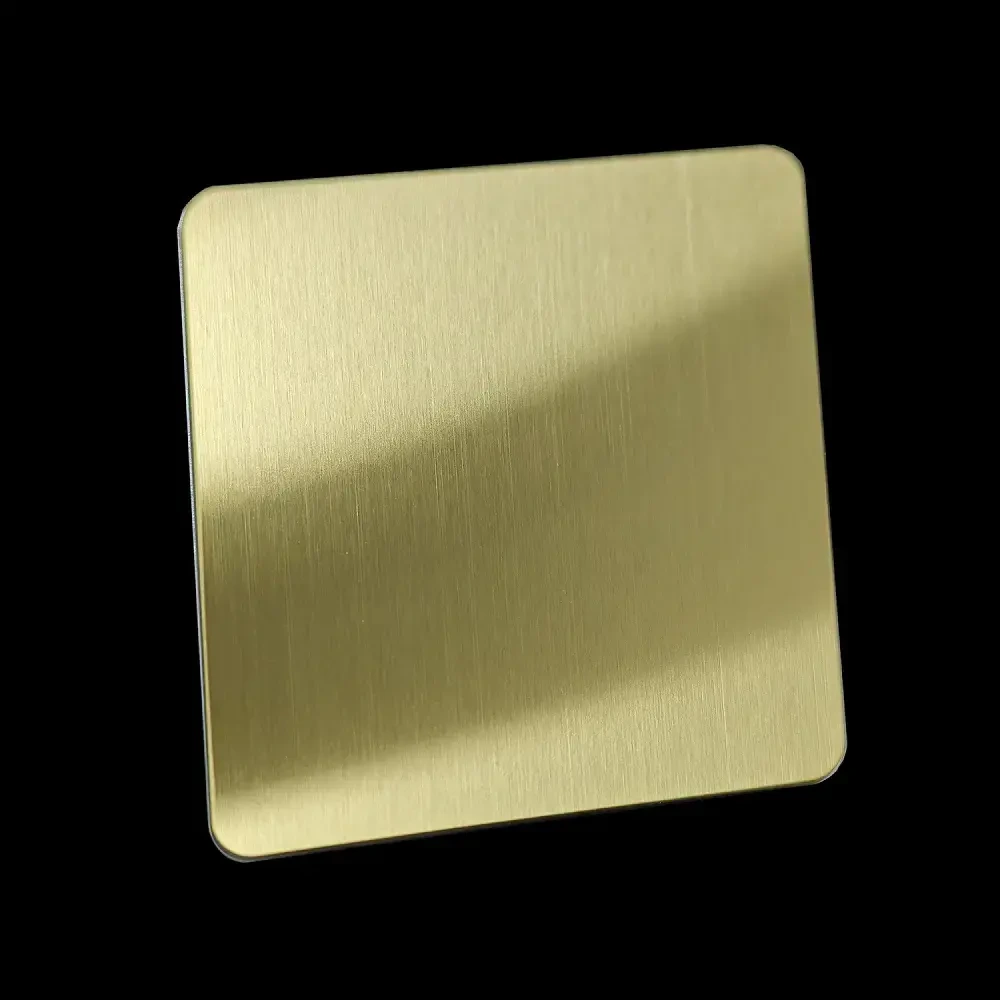
Guide to visualization for the Designer
The Workhorse: Brushed Finish
The conventional brushed finish is the appropriate industry standard. It is praised for its durability and efficiency. The texture is made of shorter, less uniform lines which give the surface a visible grain that is very solid and forgiving.
Thus, its brightness is diffused and soft. This trait makes it one of the most practical choices for busy places, as it can easily conceal minor scratches, fingerprints, and other signs of daily wear and tear.
The Refined Detail: Hairline Finish
The stainless steel hairline finish is a more progressive and directional option. It is characterized by continuous, unbroken lines drawn in a single direction, creating a textured surface that feels as smooth as silk.
This refinement can be measured. A hairline finish typically has a lower surface roughness (Ra value) of around 0.2-0.4μm, which is the technical reason for its smoother and more delicate appearance.
Light & Texture Nuances
Interacting with Light
The way a finish works with light is the main factor in its architectural effect. The short, multi-directional grain of the traditional brushed finish scatters and spreads light, producing a soft, non-directional glow that reduces reflections and creates a uniform look.
Conversely, a stainless steel hairline finish is designed to direct light. Its long, parallel lines present a sharp, linear reflection that moves across the surface as the observer changes their viewing angle, thus adding a dynamic, spatial sense, and a premeditated motion to the design.
Tactile and Visual Feel
The hands-on difference is clear and should guide specification.
- Traditional Brushed:
- Visual: Softer, muted, non-directional glow.
- Texture: More noticeable, slightly rougher texture.
- Hairline Finish:
- Visual: Crisp, linear shine that creates movement.
- Texture: Silky smooth, highly uniform feel.
Application Showcase
Specifying Hairline Finish
Based on our experience, a stainless steel hairline finish is chosen for projects that demand precision, luxury, and intricate detailing. The shiny, controlled elegance this finish brings elevates parts that are looked at closely.
We consider it ideal for custom furniture trim, premium appliance fronts, luxury hotel elevator interiors, and building feature walls. In these situations, the way it reflects light linearly enhances the form and highlights a high degree of craftsmanship.
The Case for Brushed Finish
On the contrary, traditional brushed stainless steel is a practical choice for spaces that emphasize strength, low maintenance, and a forgiving surface. Its main strength is its ability to conceal wear.
This is usually our first choice for busy commercial kitchen backsplashes, public transit handrails, and high-traffic area kick plates and door hardware. In this case, the priority is given to superior performance and ease of cleaning.
A Deliberate Choice
Choosing between a hairline and a brushed finish is a style statement, not just a technical one. Your selection should be a planned act that supports your design story.
Opt for traditional brushed to achieve a dependable, gentle appearance that handles heavy usage. A stainless steel hairline finish is a good choice if your mission is to present a feeling of refined, dynamic elegance. Armed with this knowledge, you can make the specifications with confidence, ensuring that the material complements your vision perfectly.